Explore our work
Case Study: Designing the Future of Fairlop Waters
As part of our commitment to being a UNICEF Child Friendly Borough, the team behind the Fairlop Waters expansion project placed children and young people at the heart of their plans. To ensure the park’s 250-acre growth reflects the needs of the next generation, a specialized engagement pack was created to capture design ideas from CFR Ambassadors and the Redbridge Youth Council. This diverse outreach included local young people and those further across the borough, ensuring that even those who don't currently use the park could shape its future facilities.
The impact of this collaboration is already being seen in the Fairlop Waters Masterplan. For instance, local Sea Scout groups directly influenced the development of a new adventure trail by creating drawings and models of their ideal play features. Young people also helped develop a nature map and set up "Grow Zones" to boost biodiversity. Moving forward, the project continues to involve children in designing sculpture trails and choosing new play space equipment, making Fairlop Waters a truly inclusive space where every young voice matters.
Case Study: A Forest for the Future at Hainault
As part of our journey to becoming a UNICEF Child Friendly Borough, the £7 million Hainault Forest restoration project focused on giving children and young people a voice in how they experience nature. Through creative workshops at the Hainault Youth Centre, local young people co-designed a vibrant billboard exhibition that reimagined the borough as a playful, alternate world. These young artists provided the art direction and character illustrations for the installation at Space Studios, proving that our youth are not just users of our parks, but creative leaders who can shape how we view our green spaces.
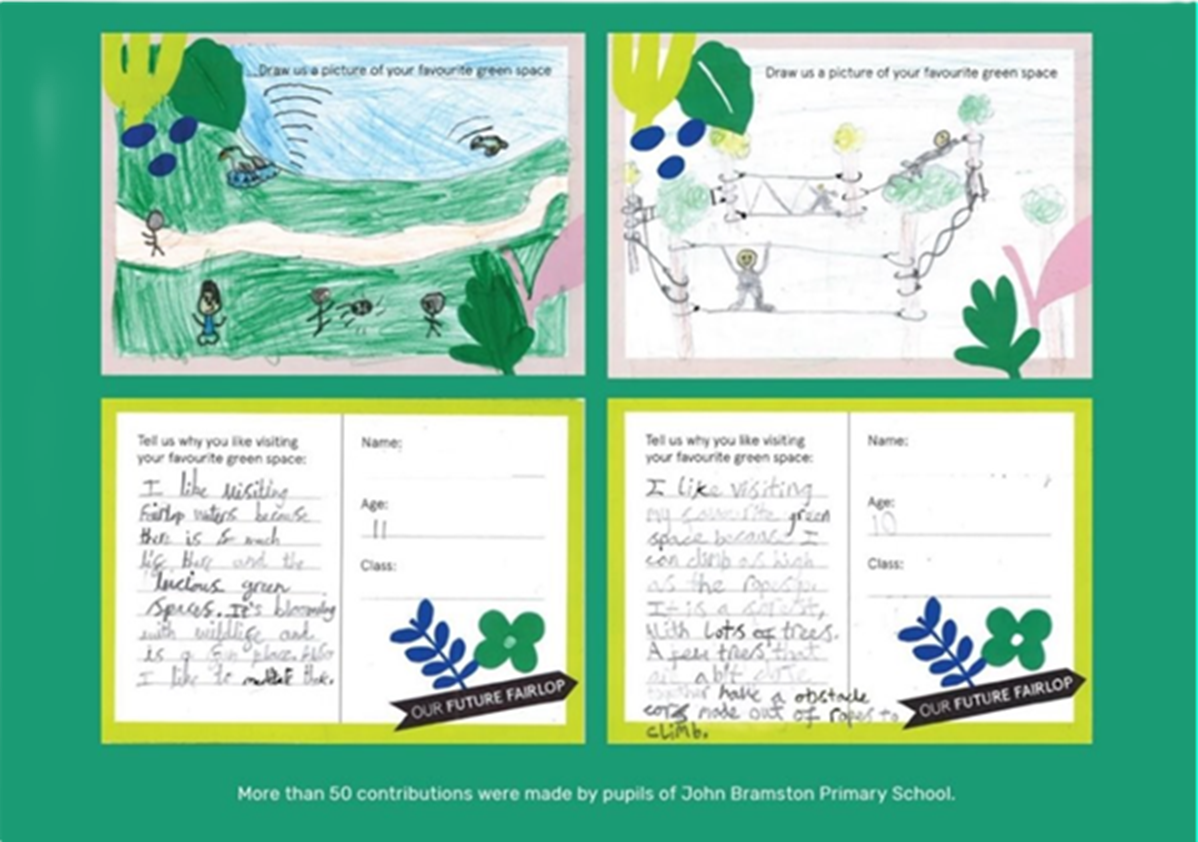
Engagement also included postcard activities with John Bramston Primary School, Forest Academy Secondary School and workshops with Sea Scouts, Young Advisors, and children who use the Fairlop Outdoor Activity Centre. They suggested ideas such as sensory spaces, better access, nature‑friendly features and more opportunities to explore and play. Their feedback was used throughout each stage of the design process.
The engagement also strengthened young people’s confidence and connection to their local area. Students involved in the Belonging Project described feeling listened to and more empowered in their community. Their artwork was later displayed at Hainault Library, and young people continued to contribute to design discussions and youth led surveys linked to the forest and nearby Hainault Youth Centre. This work has helped embed children’s voices in local placemaking and fostered a deeper sense of ownership among young people in Hainault.
The results of this collaboration are now live across the park’s new facilities. Children from local primary schools were directly involved in choosing new equipment for the woodland-inspired adventure playground, which now features Redbridge’s biggest slide and natural wood installations that tell the story of the forest’s royal history.
Case Study: Step In Conference Ending Misogyny Together
The Step In Conference brought together students, local leaders and campaigners to talk honestly about how we can end misogyny in Redbridge. Young people led powerful conversations about respect, relationships and safety, with the Child Friendly Redbridge team there to make sure their voices shaped the actions that follow.
The conference builds on the wider Step In education programme, which is part of Redbridge’s award‑winning #ThisHasToStop campaign, a multi‑year partnership between the council, schools, community groups and residents to tackle violence against women and girls. The programme is now rolling out across all Redbridge schools. In secondary schools, students in Years 7, 8 and 9 take part in 10 short sessions, and in primary schools, Year 6 pupils complete 5 lessons exploring harassment, harmful behaviours and the impact this has on individuals and communities. They also learn practical ways to challenge disrespect and support their peers.
Before the conference, young people had already been working on school‑based projects highlighting how sexism, harmful language and misogynistic attitudes show up in their daily lives. Many groups created campaigns on consent, positive masculinity and gender equality, calling for better education and earlier intervention. Their work helped shape the themes of the conference and gave students a strong platform to speak directly to decision‑makers about the change they want to see.
Together, the Step In programme and the Step In Conference are helping build a borough where young people feel confident to challenge misogyny and where adults are committed to listening and acting on what they say.
Case Study: Mental Health Map
During the pandemic, many young people in Redbridge said they were feeling down, stressed or overwhelmed for the first time, while others with existing mental health challenges felt worse. To help, the Child Friendly Redbridge Ambassadors co‑designed a survey to understand what support young people needed. They created the questions themselves, promoted the survey in their schools and networks, and collected over 900 responses; the highest response rate compared to other boroughs.
Using the results, the team created the Redbridge Mental Health Map, an online tool showing young people where they can find local support. It includes not just mental health services, but also activities that help people feel better, like arts programmes, sports clubs and community groups. The aim was to help young people build confidence and resilience before they reach crisis point. The map has since been shared widely with students, families and practitioners across the borough.
Young people were involved throughout the process, helping shape the questions, sharing the survey with peers and making sure the final resource was relevant and easy to use. Their insight influenced services across Redbridge as partners used the findings to improve how they support young people’s wellbeing.
Case Study: Ilford Arrival – Designing Safer, More Welcoming Spaces With Young People
Ilford Arrival is a major project to transform public spaces around Ilford Town Centre, the River Roding and new walking routes. A big part of the programme is codesign — making sure the people who use these spaces help shape how they look and feel.
Through the Ilford, Be Heard! campaign, a group of young women aged 16–25 were recruited to become a CoClient Team. They worked alongside the council as equal decisionmakers, taking part in workshops, mapping sessions and design activities. Their experiences of safety, access and inclusion directly shaped the design brief, leading to principles like: Safety First, People Want to Be Here, Playful & Sensory Spaces, Connection to Nature, and A Well Lit Environment
Local schools including Ursuline Academy and Highlands Primary School also played a key role. Students explored bridge ideas, habitat creation, playful design, and how the river path could feel calm, sensory and welcoming. They produced drawings, models and concept ideas that fed directly into the designs for the pocket park, bridge and river path.
The programme also worked with residents, neighbours and community groups. People shared priorities like better lighting, tackling antisocial behaviour, protecting wildlife, improving routes and celebrating local culture. These conversations shaped how each site the pocket park, bridge, path, gyratory and wider public spaces will be designed
Case Study: Marley the Mammoth Mural
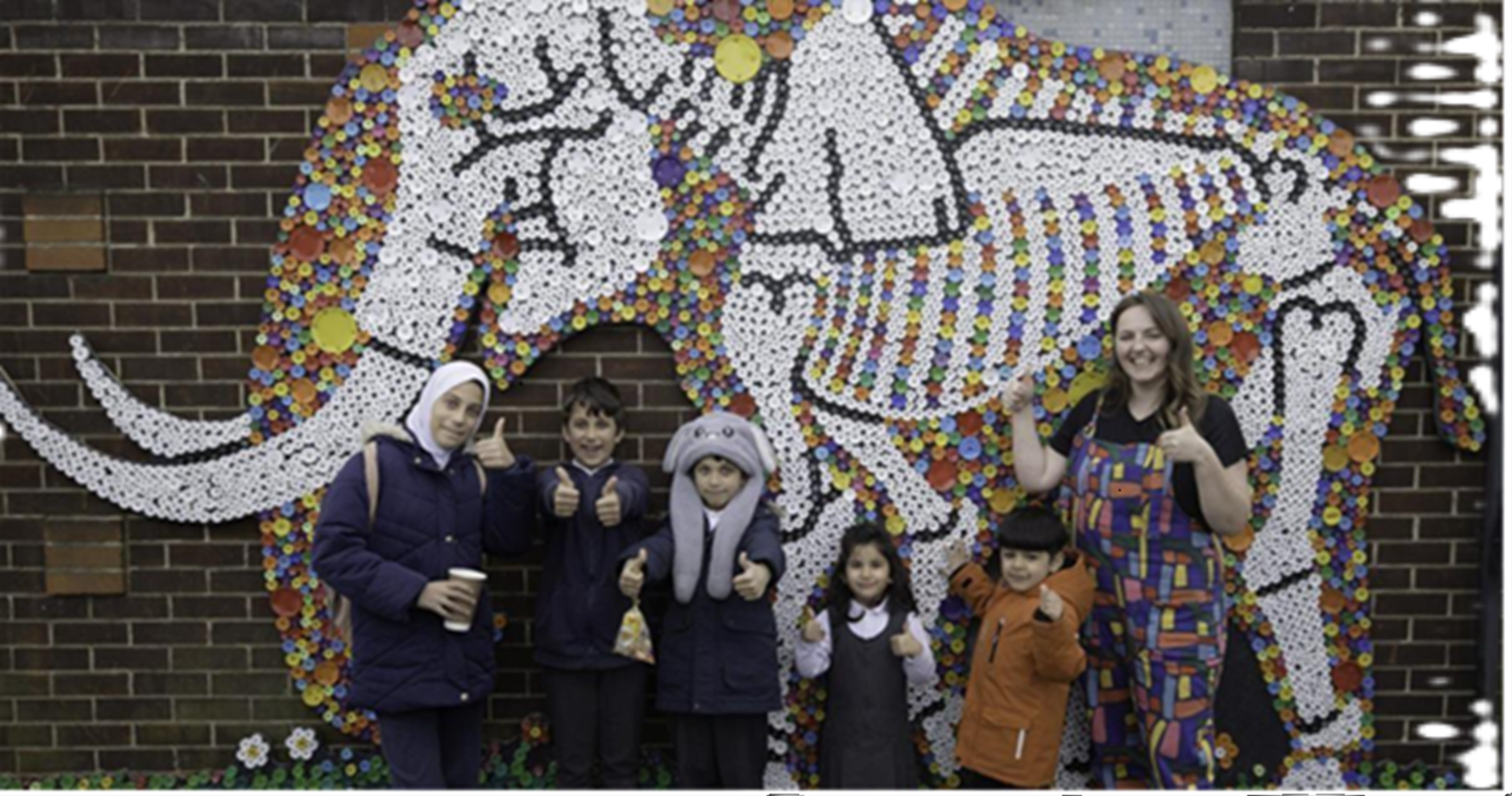
Marley the Mammoth is one of Ilford Lane’s most eye‑catching pieces of public art and London’s biggest mural made from recycled plastic bottle lids. The project began after young people asked for more nature‑themed art in the area. Working with artist Caitlin Atherton, pupils from Cleveland Road and Uphall Primary Schools helped design a life‑sized Steppe Mammoth, inspired by the real mammoth skull discovered on Ilford Lane in 1864.
Children were involved at every stage: they learned about Ilford’s Ice Age history, helped choose colours, created drawings, and became environmental champions by leading a borough‑wide effort to collect over 10,000 plastic lids for the mural. Their work shaped the final design and ensured the mural reflects both local heritage and young people’s creativity.
Case Study: Annual Youth Climate and Sustainability Forum
The Youth Climate & Sustainability Forum was started to give young people a real voice in shaping the borough’s climate future. The idea grew directly from conversations with pupils during school workshops and tree‑planting sessions, where young people called for a dedicated space to discuss climate change and influence local decisions.
Held annually, the forum brings together students from primary and secondary schools across Redbridge for a day of hands‑on workshops, debates, and practical skill‑building. Activities include repair cafés, biodiversity sessions, creative climate art, sustainable cooking, and even a “Dragon’s Den” style pitch where students present eco‑projects to help improve their schools. Child Friendly Redbridge Ambassadors help plan and host the event to ensure the agenda reflects what matters most to young residents, from tackling single‑use plastics to protecting local green spaces.
The forum also provides a rare opportunity for young people to speak directly with council leaders, policymakers and climate experts helping turn “eco‑anxiety” into collective action. Their ideas feed into the borough’s Climate Action Plan and wider sustainability work. Schools leave with new skills and resources, and young participants form a borough‑wide network of “Eco‑Warriors” who take their learning back into classrooms and communities.
Case Study: Rights Week
Rights Week 2024 took place across Redbridge schools to help children and young people learn about their rights and how these shape their daily lives. Schools delivered special assemblies and lessons using materials created for the week.
Before Rights Week, the Unicef UK and the Council ran dedicated children’s rights training for young people. These sessions helped them understand the UN Convention on the Rights of the Child and built their confidence to speak up about issues that matter to them. The training also prepared the Child Friendly Redbridge Ambassadors for their roles during the week
Child Friendly Redbridge Ambassadors joined a co‑design focus group to shape key messages and review lesson content. They discussed fairness, safety, mental health and belonging, and their feedback directly influenced the final Rights Week resources used across schools. During the week, pupils explored rights linked to safety, inclusion, wellbeing, participation and the environment. Teachers used lesson plans, activities and discussion prompts to help pupils connect rights to their own experiences.
Case Study: School Zones
Redbridge worked with Uphall Primary and Cleveland Road Primary to deliver the GLA‑funded School Zones (Superzones) programme, improving the 400‑metre area around each school to make it cleaner, safer and more child‑friendly. The project focused on issues identified by pupils, families and residents, including pollution, heavy traffic, lack of green space and limited access to healthy food options.
Children had a major role throughout. Pupils took part in walkabouts, surveys and workshops to assess the area, monitor air quality, and highlight concerns like litter, unsafe driving and the need for more greenery. Their feedback shaped the action plan for each zone, from improving crossings near Ilford Lane to creating new planting areas and promoting cleaner travel.
The project delivered several improvements. Both schools saw greener spaces created around their sites, active‑travel initiatives expanded, and new bikes and scooters provided to support cycling. Uphall achieved Gold TfL STARS accreditation, while Cleveland Road continued working towards Gold. A new cycleway opened near Uphall, and School Streets measures began rolling out to reduce traffic at pick‑up and drop‑off times.
To celebrate the changes, Uphall held a World Car Free Day event where the Eco‑Warriors tested new bicycles and heard the announcement of their Gold award. Surveys with parents, staff and residents showed improvements in safety, awareness of clean air, and the overall environment around both schools.
Case Study: Embedding Children’s Rights in the 0–19 Health Service
Redbridge has transformed the way its 0–19 Healthy Child Programme (health visiting and school nursing) is commissioned by building children’s rights directly into the service specification. Providers were required to show how they would embed Child Rights Based Principles in their everyday work, ensuring children’s voices, dignity and best interests shaped the support they receive.
All operational leads completed UNICEF training, and the service committed to training all new staff. This shift strengthened how teams plan and deliver support, leading to more meaningful engagement with children and young people, including work with the Youth Council, a new Year 7 health and wellbeing questionnaire, and young people helping shape school nursing resources and developmental‑review videos.
The approach also improved inclusion. A dedicated Inclusion Health Visitor now works with underserved families, including those living in refugee hotels. After raising concerns about unhealthy meals, the team worked with a new food provider and secured healthier options for families with plans to expand across more hotels.
Parents have shared positive feedback, noting that practitioners clearly act in their child’s best interests. Children’s rights are now a standing item in contract‑management meetings to ensure the service continues to uphold its commitments. This work has strengthened accountability, improved engagement, and ensured Redbridge’s health services fully reflect a child‑rights‑based approach.
Case Study: Children’s Rights Training Across Redbridge
As part of Redbridge’s journey to become a UNICEF UK Child Friendly Community, the council delivered borough‑wide children’s rights training to staff, partners, Councillors and young people. The goal was simple: make sure everyone who works with or makes decisions about children understands their rights and knows how to put them into practice.
More than 400 people took part in sessions led by UNICEF UK including council teams, schools, voluntary groups, police, health partners and community organisations. The training covered what children’s rights are, how to involve young people in decision‑making, and how to make services more inclusive and equitable. Elected Members also completed dedicated sessions to help them apply rights principles when shaping local policy.
Children and young people were involved too. Through workshops, youth council discussions and co‑designed activities, young people explored how rights affect their lives and how they can influence services. Their feedback helped shape resources and improve conversations with school nursing and health teams.
Feedback across the board was extremely positive, with participants describing the training as “eye‑opening” and “inspiring”, and saying it helped them listen more actively to children and consider their best interests when making decisions. This programme has helped build a shared understanding of children’s rights across Redbridge.
Case Study: Redbridge Youth Democracy Event
Redbridge’s Youth Democracy Event gives young people a real chance to influence local decisions. Every year, students aged 15–18 from schools across the borough prepare and present their ideas on issues that matter to them, such as climate change, poverty, safety or education, directly to councillors, Cabinet Members and senior officers in the Council Chamber.
Before the event, pupils receive an information pack and can ask officers questions to help them research their topic. This support helps them build confidence and understand how local government works. On the night, they present to the Mayor and Members, followed by a Q&A where students and councillors discuss solutions together. Their ideas are then shared with relevant council teams to be considered in future work.
The event has a strong focus on representation including care‑experienced young people and others who may not always have opportunities to speak in public. Many participants have gone on to join the Youth Council or become Child Friendly Redbridge Ambassadors. Schools continue to take part each year, showing how much young people value being heard. The Youth Democracy Event has become a powerful way for young people in Redbridge to shape their borough, build skills and see their ideas taken seriously by decision‑makers
Case Study: A Systems Approach to Tackling Childhood Obesity in Redbridge
Redbridge is taking a joined‑up, whole‑systems approach to support healthier futures for children. Rather than focusing only on individual behaviour, the council looked at the wider factors that shape children’s wellbeing — including access to green space, local food options, active travel, school environments and family support.
To understand what changes were needed, the Councils Public Health team carried out a borough‑wide Health Equity Audit and worked closely with schools, leisure providers, planning, environmental health and commissioned services like Active Stars. This partnership approach helped identify barriers faced by families and opportunities to make healthy choices easier.
As a result, Redbridge introduced a series of practical changes, including:
- Supporting schools to achieve Healthy Schools London, Sugar Smart and Water‑Only status
- Improving access to affordable physical‑activity programmes through services like Active Stars
- Creating healthier high streets by limiting new fast‑food outlets near schools, parks and leisure centres
- Promoting healthier food and drink through council‑owned advertising spaces
The council also expanded low‑cost activity offers such as Mega Mix, giving children opportunities to try new sports and creative activities during school holidays, with SEND‑inclusive options. Through this systems approach, Redbridge is creating environments that make it easier for children to be active, eat well and thrive, supporting families, schools and communities to build healthier habits for life.
Case Study: Co‑Designing Redbridge’s Early Years Strategy
Redbridge’s Early Years Strategy 2023–2028 (PDF 809 KB) was developed through a collaborative, child‑friendly approach that placed families, practitioners and partners at the centre of shaping priorities for children under five. The strategy recognises that the early years lay the foundations for lifelong health, learning and wellbeing and that families themselves are experts in their children’s needs.
To develop the strategy, the council worked with a wide range of partners across early education, health, family hubs and community services. Crucially, parent representatives were recruited to help co‑design both the strategy and its delivery, ensuring that lived experience guided decisions from the start. This work aligned closely with the Child Friendly Redbridge principles, especially children’s rights, safety, wellbeing and equitable access to services.
Families helped identify the biggest challenges facing young children including access to childcare, parent support, the cost of living, early development needs and safe spaces to play and learn. Their insights shaped the vision, goals and planned actions within the strategy, from improving support for parents and carers to strengthening early identification of needs.
The strategy also connects strongly with other child‑friendly initiatives in Redbridge, such as trauma‑informed practice, family hubs, and whole‑systems work on child health. This joined‑up approach ensures that the needs of under‑fives and their families are considered across services and local planning.
Case Study: Empowering young voices to inform new Tackling VAWG Strategy
In November 2024, Redbridge Council worked with Cleveland Primary School to hear directly from children as part of shaping the new Violence Against Women and Girls (VAWG) Strategy 2025–2035. More than 100 Year 5 pupils took part in four creative workshops designed to help them explore fairness, respect and gender expectations in a way that felt safe, fun and meaningful. This work supports Redbridge’s wider commitment as a UNICEF UK Child Friendly Community, ensuring even younger children can influence decisions that shape their futures.
During the workshops, pupils explored gender stereotypes by sorting adjectives, hobbies and job roles into “pink” and “blue” categories. This sparked thoughtful conversations about why certain words are labelled in gendered ways and how these labels might limit what people feel able to do. Children were then encouraged to imagine their futures using both pink and blue words, helping them challenge stereotypes and envision a world where anyone can follow their interests without judgement.
The ideas and reflections shared in these sessions are now helping shape the borough’s long-term VAWG Strategy, particularly around early education, respectful relationships and challenging harmful attitudes before they become entrenched. Teachers also noted that pupils left the workshops more confident to question unfairness and more aware of how stereotypes can affect everyday life. This work highlights how children’s voices continue to influence policies across Redbridge, building a fairer and more equal community for the future.
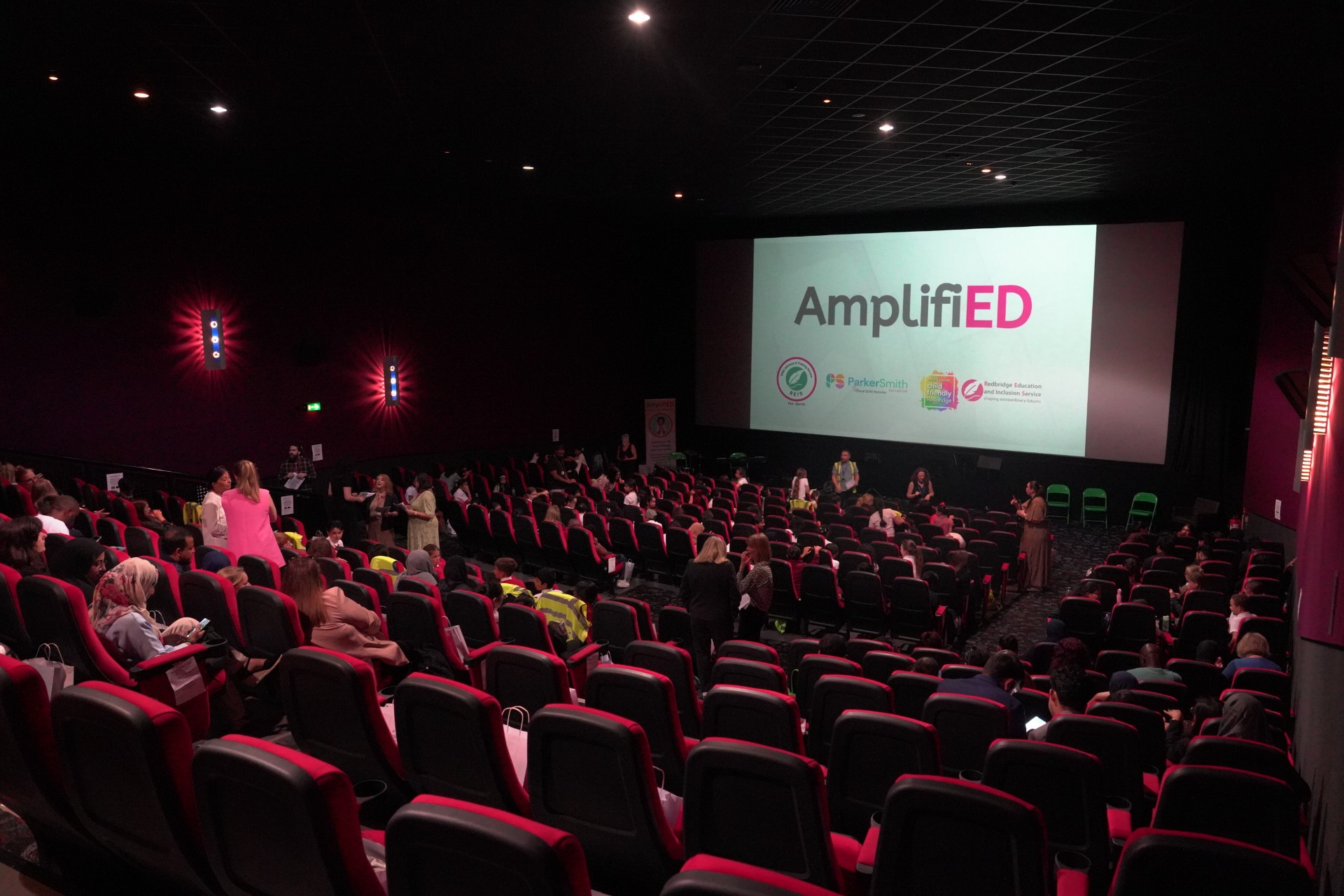
Case Study : AmplifiED - Youth Voice Conference
- A dynamic performance by the Isaac Newton School Band
- A touching signed and sung performance by the Roding Primary School Sing and Sign Choir
- Beautiful vocal pieces from the Uphall and Highlands Federation Choir